Pay Equity as a Business Advantage: Positioning Your Business for Success

Complying with the Pay Equity Act is not just a legal obligation, but an advantageous strategy that positions a business with a positive brand reputation. Having a poor reputation can be detrimental to a business’ customer base and profits. According to Leger’s 2026 Reputation study, last year, about 50% of consumers stopped buying from a company due to its poor reputation. With women holding 75% to 80% of spending power (estimated at a value of about $1.2 trillion in 2023), women are an attractive customer base to gain the loyalty of. By communicating compliance with pay equity and other inclusive practices, companies can improve their brand reputation and increase profits.

Brand Reputation

A positive brand reputation brings financial success.

To have long-term success, companies must build and maintain a strong, authentic relationship with consumers. Companies need to ensure they uphold their reputation by consistently delivering to the standard of their customers’ expectations. It’s crucial to maintain a positive reputation because it holds a heavy influence over consumers’ decisions. According to Leger, close to 80% of consumers say that a brand’s reputation is an important factor when purchasing a service or product.

Pay inequity can harm a brand’s reputation. A global survey found that nearly 30% of senior HR leaders and almost 25% of senior business leaders viewed negative external brand reputation as an outcome of pay inequity. These responses indicate that many leaders recognize that pay equity is not only a fair policy, but a strategic tactic to uphold their brand’s reputation.

Brand Advocacy and Loyalty

One of the biggest brand advocates for a business is its own employees.

Employees’ experiences and perceptions of their employer contribute to the way they speak about the company for years to come. As a result, both current and former employees are significant influences on a brand’s reputation. Understanding employees’ values and prioritizing workplace initiatives accordingly is a business-wise strategy, not only for company culture, but also for a brand’s reputation.

ADP’s 2020 survey found that close to half of younger workers stated they would feel more loyal to their organization if they took a public stance on diversity and inclusion. Reflecting this, many companies have already incorporated diversity and inclusion policies and initiatives in the workplace. ADP’s survey findings also show that one-third (32%) of Canadians believe that their organization prioritizes diversity and inclusion, and 36% of Ontarians feel that taking steps to improve diversity and inclusion at their workplace is a top priority for their company. A 2023 survey from ADP revealed that 71% of working Canadians believe pay equity is a priority for their organization (72% of women and 70% of men). Together, these findings demonstrate that employees value efforts to build inclusive and equitable workplaces and recognize when employers are taking steps to advance these goals.

External Benchmarks

When a company communicates the fair and equitable practices that they follow, the practices are further associated with the brand’s reputation.

Various third-party programs and workplace rankings, such as Canada’s Top 100 Employers, Great Place to Work Canada, and similar employer-recognition initiatives, release yearly lists ranking the most desirable workplaces, based on factors such as work environment, benefits, and staff ratings. Participation in or recognition by such programs can signal to consumers and candidates alike that fairness, trust, and employee well-being are top priorities for your organization.

Communication is Key

What companies say to consumers and how they say it matters.

UN Women released an international study in 2024 that was the first of its kind, which demonstrated that inclusive advertising, which avoids stereotypes and features authentic portrayals, increases both brand value and profits. The study found that inclusive ad campaigns made consumers 62% more likely to choose a brand as their first choice and increased customer loyalty by 15%. It also contributed to 5% higher shorter-term sales and 16% higher longer-term sales. Demonstrating that in the long run, inclusive practices pay off.

For employers looking to be more inclusive in their communications, the Pay Equity Office provides a resource to help employers create gender-neutral job postings. Visit the Gender Neutral Language for Job Ads resource on the PEO’s website to learn more.

Conclusion

In an increasingly values-driven marketplace, reputation matters.

Positioning your business to gain and maintain a positive brand reputation reaps many benefits. Complying with and thoughtfully communicating pay equity practices helps improve brand reputation, earn the trust of employees and consumers, and gain a competitive advantage.

Pay equity is a legal requirement for public-sector employers and private-sector employers with 10+ employees in Ontario. For more information on obligations and compliance, visit: https://payequity.gov.on.ca/i-hire-in-ontario/.


Pay Equity as a Business Advantage: Positioning Your Business for Success2026-09-15T09:57:34-05:00

Pay Equity as a Business Advantage: Maximizing Profits Through Pay

Pay equity has organizational and economic benefits. When organizations comply with the Pay Equity Act and adopt other equitable workplace practices, they are better equipped to retain talent, reduce turnover costs, and foster more diverse and inclusive workplaces, positioning them for stronger financial outcomes. As seen from Statistics Canada research, on a larger scale, policies that enable women to work and earn more, like the Pay Equity Act, are contributing to boosting the Canadian economy.

Reducing Costs Through Retention

Employee turnover represents a high and growing cost for Canadian businesses. According to a 2026 survey, Canadian businesses spend an average of $30,680 per employee on turnover-related expenses (up 5% from last year). This includes the costs of lost productivity, recruiting, onboarding, and training.

When employees do not believe that pay practices in their organization are equitable, they are more likely to consider leaving. The weight of pay inequity is evident in a 2023 ADP Canada survey, which found that the majority of Gen Z (63%) and Millennial (53%) respondents would consider leaving their roles if they experienced gender-based pay inequities. Proactively avoiding pay inequities is a clear strategy to retain staff.

A 2026 Randstad report found that Canadians rated reliable pay and benefits as one of the top factors contributing to a strong sense of job security. Aligning employer and employee values is beneficial to companies’ retention rates and financial success. Ensuring fair, equitable pay fosters a sense of job security for employees and reduces turnover.

Boosting the Economy

Pay equity is good for women and good for the economy.

Inclusive workplace practices such as pay equity not only lead to greater financial performance at the organization level; they also enable women to stay in the workforce which boosts the national economy overall. In 2024, women aged 25 to 54 in Canada had a record-high labour participation rate of 85%. The increase in women’s labour participation rate has driven Canada’s real gross domestic product (GDP) per capita 13% higher than it would have been otherwise. In 2024, this represented an increase of $8,658 in income for each Canadian. This showcases that women’s participation in the labour force, and policies that boost their participation, result in gains for the greater Canadian economy.

Women’s Spending Power

Pay equity increases the amount of money women earn, which is significant for women’s economic independence and spending power. The Business Development Bank of Canada (BDC) recognizes that, through direct purchasing power and influence, women are responsible for 75% to 80% of consumer spending, which amounted to about $1.2 trillion in 2023.

Conclusion

In Canada and globally, inclusive policies and practices like pay equity are valued by, and valuable to, companies and their workers.

Pay equity is more than a compliance obligation; it is a meaningful way to reduce turnover, strengthen business performance, improve profitability, and contribute to long-term economic growth. Paying equitably, increasing gender diversity, and closing the gender wage gap are all intertwined and boost the Canadian economy.

Pay equity is a legal requirement for public-sector employers and private-sector employers with 10+ employees in Ontario. For more information on obligations and compliance, visit: https://payequity.gov.on.ca/i-hire-in-ontario/.
Pay Equity as a Business Advantage: Maximizing Profits Through Pay2026-08-17T13:39:45-05:00

Pay Equity as a Business Advantage: Attracting and Retaining Talent

Four professionals standing in a bright office setting, each holding documents or a notebook. A desk, chair, wall art, and a potted plant are visible in the background. In the lower left corner, the Ontario logo and text read: “PAY EQUITY OFFICE BUREAU DE L’ÉQUITÉ SALARIALE Ontario.”Attracting and retaining the right talent remains a key challenge facing employers in Canada.

According to Mercer’s 2026 People Risks Report, the top concerns around labour shortages in Canada include skills mismatches between available employees and required roles (40%), increased labour costs due to competition for talent (35%), and operational disruption from insufficient staffing (32%).

In this labour market context, employers are not just looking to fill roles; they need to attract and retain talent with the right skills and a long-term fit.

This is where pay equity comes in. While it is a legal requirement for many employers in Ontario, pay equity can also reflect an employer’s commitment to equitable compensation practices, which plays a key role in attracting and retaining the right talent in a competitive labour market.

Talent Attraction

Research from Great Place to Work Canada (2025), based on 125,000 employee responses across multiple sectors, found that fairness and inclusion received an average positive score of 93%. This highlights their importance to employee belonging, well-being, and performance.

Fairness and inclusion can be advanced through various workplace practices, including equitable compensation practices such as pay equity, which ensures employees receive equal pay for work of equal value.

Against this backdrop, implementing and communicating pay equity can signal that an employer values fairness, inclusion, and equitable practices. Employers can make this visible by highlighting pay equity in job postings, career pages, and broader employer branding. This can strengthen the employer’s appeal to the right talent who prioritizes these values when considering employment opportunities.

Talent Retention

Attracting the right talent is only part of the challenge; retaining them is equally important.

When employees believe pay practices are equitable, they are more likely to stay with their organization. In contrast, perceived pay inequities can increase employee turnover.

A 2023 ADP Canada survey found that 63% of Gen Z respondents and 53% of Millennials would consider leaving their roles if they experienced gender-based pay inequities.

The cost of them leaving can be high. A 2026 Express Employment Professionals–Harris Poll survey found that Canadian businesses spend an average of $30,680 per employee annually on turnover-related expenses, including recruiting, onboarding, training, and lost productivity.

By implementing pay equity, employers can reduce employee turnover costs.

Conclusion

Pay equity is more than a compliance obligation. It can serve as a meaningful way to attract and retain talent.

As employee expectations of fairness, inclusion and equitable pay practices in the workplace continue to evolve, employers have an opportunity to go beyond compliance and make pay equity a visible part of their talent attraction and retention strategies.

Pay equity is a legal requirement for public-sector employers and private-sector employers with 10+ employees in Ontario. For more information on obligations and compliance, visit: https://payequity.gov.on.ca/i-hire-in-ontario/

Pay Equity as a Business Advantage: Attracting and Retaining Talent2026-07-23T15:01:36-05:00

Ontario’s Pay Equity Office Reflects on Groundbreaking Report: “The Gender Pension Gap”

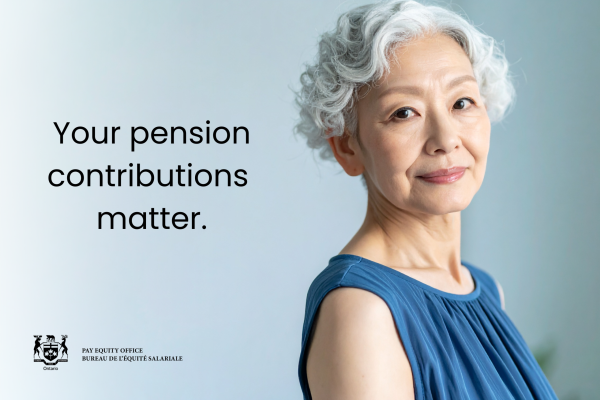
With the deadline for Canadians to contribute to their RRSP for the 2025 tax year approaching on March 2, 2026, the concerning 17% gender pension gap highlights that women deserve policies that make their retirement contributions count.
Even though Canada has a robust retirement income system, women have been receiving less retirement income than men for decades. This is a result of a systemic imbalance that weakens economic security for all Canadians.

In 2024, Ontario’s Pay Equity Office with Dr. Elizabeth Shilton, feminist litigator, labour lawyer and pension expert, published the ground-breaking research paper, Understanding the Gender Pension Gap in Canada. The report found that although Canada’s retirement income system is recognized as one of the strongest in the world and retirement incomes have increased substantially for all Canadians, not all Canadians equally benefit. Men have consistently fared better than women, leading to a persistent gender pension gap of 17%, which means that women earn $0.83 for every $1.00 that men earn in retirement income.

This trend is still relevant and concerning today, even though the report was published over a year ago. The gender pension gap impacts Canadians not only during their retirement; it is an indicator of gender inequity at various stages of their career.

The Gender Pension Gap (GPG) is the difference between retirement income received by men and women. The Gender Pension Gap in Canada is measured across the three “pillars” of Canada’s retirement income system:

  • Pillar One: Old Age Security (OAS) and Guaranteed Income Supplement (GIS).
  • Pillar Two: Canada Pension Plan (CPP)/Québec Pension Plan (QPP).
  • Pillar Three: Private Retirement Income.

In 2020, approximately 200,000 more women than men aged 65+ were living below Canada’s low-income cut-off. Digging deeper, 21% of women aged 75+ had incomes below this threshold — a concerning 51% higher than their male counterparts of similar age. This highlights a longstanding inequity that requires immediate action.

The report, Understanding the Gender Pension Gap in Canada, found that women spend fewer hours in the paid labour market, and when they do, they are more likely than men to earn lower wages. These factors contribute to the persistent gender earnings gap, leading to women having less earnings to contribute to their savings and retirement plans than men, which ultimately results in the gender pension gap. Of Canadians between the ages of 35 and 64 years old, women were more likely than men to report having no savings. When surveying the number of Canadians who have less than $5,000 in savings, 1 in 2 women (49%) report having less than $5,000, compared to 1 in 3 men (33%).

Factors Causing the Gender Pension Gap:

  • The existing gender wage gap (GWG). Two of the three “pillars” of Canada’s pension system are designed to be tied to earning power. Canada’s gender income gap was 28% (2021) for average annual earnings, and 11% (2020) for average hourly earnings. Women are less likely to have personal retirement savings due to lower incomes and fewer opportunities for financial investment.
  • Historical Bias: Canada’s public pension system was and still is designed for heterosexual couples with a male breadwinner. Pillar Two of Canada’s retirement income system is based on earnings and contributions, which historically favours men who have had higher incomes and longer work histories. This perpetuates the gender pension gap as women often earn less over their lifetimes and may have gaps in their employment due to caregiving responsibilities.
  • Caregiving: Women are more likely than men to work part-time due to caregiving responsibilities. In 2021, 24.4% of all Canadian female workers were part-time compared with 13% of all male workers. Women’s most-cited reason for working part-time was caring for children. Available data states that “one quarter of women reported caring for children as their reason for working part-time, compared to 3.3% of men”. Furthermore, women who work part-time may not be eligible to enroll in their workplace pension plan if they work fewer hours than their employer’s threshold.
  • Unpaid domestic labour is still mostly performed by women. In 2017, 89.9% of insured mothers in Canada took maternity/parental leave – at reduced income level – compared with 11.9% of insured fathers/partners.
  • Childbearing and child-rearing. Women are more likely than men to exit the labour market (temporarily or permanently) after having children. In 2015, the employment rate of women with children under the age of 6 was 69.5%, yet the employment rate of men with children under the age of 6 was 90.8%, signaling a 21.3% gap. Women’s employment rate increases with the age of their children but never catches up to that of men’s.

There are various interrelated causes of gendered differences in income. To close the gender wage gap, and ultimately the gender pension gap, the report provides actions that employers, policy makers, and individuals can take now.

Today, we have three calls to action for stakeholders to close the gender pension gap.

  1. Modernize pension systems to make them more inclusive and reflective of the workforce. Pension outcomes are shaped by evolving pension systems and labour market factors, yet the retirement income system in Canada and elsewhere have not fully kept pace with major changes in family dynamics and women’s workforce participation. In Canada in the 1960s, women represented about 30% of the labour force; by 2024, that figure had risen to approximately 85%. The workforce of today looks very different than it did over 60 years ago.
    Over time, the Canada Pension Plan (CPP) and the Quebec Pension Plan (QPP) have evolved to introduce important features that help mitigate gender-based inequities, such as mandatory universal coverage plans, dropout provisions for child-rearing years, and survivor benefits. These features demonstrate how thoughtful policy design can help reduce pension inequities while still maintaining a connection to workforce participation.
  2. Promote comprehensive workplace policies. Workplace policies such as equal pay audits, paternity leave, and flexible work arrangements can help remove systemic barriers that impact women’s participation and advancement in the labour market. Strengthening policies that support equitable earnings and career opportunities will contribute to narrowing both the gender wage gap and, over time, the gender pension gap.
  3. Organize with key players and measure outcomes. Success requires coordinated action across the government, employers, and pension providers, guided by clear timelines, measurable outcomes, regular monitoring of key metrics, and a commitment to continuous improvement. It is critical we understand that the gender pension gap is not a women’s issue – it is a structural issue that affects economic security for all.


To learn more about the gender pension gap, download our report on Understanding the Gender Pension Gap in Canada.

Visit https://payequity.gov.on.ca/what-we-do/ for more information about the Pay Equity Office.

Ontario’s Pay Equity Office Reflects on Groundbreaking Report: “The Gender Pension Gap”2026-08-19T14:27:54-05:00

Women and Skilled Trades: What’s the Trade-Off?

Employers of skilled trades workers are struggling to find the workforce required to complete their projects, causing delays and millions in lost revenue. There’s one way to address this: widen the talent pool by including more women in skilled trades. It’s been well documented and discussed that women’s lack of participation in the skilled trades is a significantly costly labour gap, considering the high labour demand across several industries.
Women entering the trades is, of course, a restructuring of our “traditional” sex-segregated labour market. Since the industrial revolution and the formation of a mass paid labour market, work was constructed through political and social policy. Through protective labour laws that only applied to women, including night work and overtime prohibitions for women, explicit bans of women working in certain industries, bans on women’s professional certifications, and marriage bars (yes, women who married were required to resign from teaching, clerical and banking), wage suppression for “women’s work,” our present sex-based clustering and compensation models are a result of policy decisions – not natural “skill and ability.”

It’s why we need policies like the Pay Equity Act, and those set out in the various Working for Workers Acts to correct structures and problems created by outdated policies from the late 1800s to early 1900s.

That brings us back to the demand for skilled trades. The most recent Ontario Building and Construction Tradeswomen (OBCT) survey found that the majority of tradeswomen see a future for themselves in the construction industry over the next two to five years.

Take construction as an example, which is one of the top industries employing skilled tradespeople across a variety of roles. According to a 2025 BuildForce Canada report, women comprise only 5% of the tradespeople employed in construction in Ontario. If employers do not want to lose out on viable workers and profits, they should reconsider century-old practices that no longer serve their sector or the reality of today’s labour market.

The Pay Equity Office has looked closely at the issues preventing women from succeeding in skilled trades. The issues are complex and varied. While some can be addressed by government intervention, others can be supported by employers who are anxious to meet their labour demand and expand their approaches to hiring.

Based on our research and observations, we have five suggestions to help address employers’ labour shortages by supporting women’s career trajectories in the skilled trades.

  1. Building a respectful, safe workplace: Addressing and preventing biases, sexism, and harassment on-site is a crucial component to women’s safety and sense of belonging on worksites and now law under the Employment Standards Act anti-harassment requirements. Sexism and bias are built into several trades because of outdated policies that regulated women and men’s work. These need to be addressed. The recent OBCT survey found that over half of respondents reported experiencing harassment. Notably, 51% of respondents who experienced and reported harassment were dissatisfied with how their complaints were handled. Proactive efforts to prevent harassment are influential; staff should be provided training to understand, identify, prevent, and report harassment.
  2. Ensuring fair compensation: Compensation is the age-old motivation factor to attract and retain talent. Money talks, and it communicates employers’ value of specific roles and skill sets. We know that women are making less than men in the skilled trades. Providing transparent and equal pay for work of equal value can attract and motivate staff. To start the journey to pay equity, the Ontario Pay Equity Office implores employers to visit the Pay Equity Solution for Small Business Do-It-Yourself Toolkit.
  3. Communicating inclusive values in job postings: Employers’ efforts to ensure staff feel included starts with the language used and the supports listed in the job posting. Using inclusive language in job posts can signal to candidates your company’s values of inclusion in the workplace. Advertising supports like childcare and harassment training/policies can help employers differentiate themselves by getting ahead of the barriers female candidates face. Employers can utilize the Ontario Pay Equity Office’s Gender Neutral Job Ads resource to craft inclusive job postings.
  4. Showcasing clear pathways to leadership: Visible representation of women in leadership roles is critical for retaining tradeswomen. It demonstrates viable career progression. One third of tradeswomen who responded to the OBCT survey reported “gender biases in decisions” as a top barrier to advancement. Addressing biases and ensuring decisions are merit-based can help women hold leadership roles in the trades. This visibility is especially important for youth entering the trades, as seeing women in leadership roles can inspire confidence and encourage them to pursue long-term careers in the sector.
  5. Addressing childcare barriers and offering supports: Last, but not least, offering crucial wrap-around supports for barriers such as childcare would aid women’s ability to work on-site. Over half of tradeswomen with children reported in the OBCT survey that incompatibility with childcare arrangements led to turning down work. Providing on-site childcare, with extended hours and coverage in rural areas, would be significant in addressing this barrier. If employers cannot provide these supports, they can consider offering scheduling flexibility to workers who may not be able to work extended hours due to their childcare arrangements.

The trade-off for having more women in trades is having to look at and challenge the century-old policy and social constructs that defined who does what kind of work. To build a better workforce, employers in in-demand fields can challenge outdated assumptions, policies and workplace practices to engage women in the trades as part of a vital and respected part of their labour force.

Women and Skilled Trades: What’s the Trade-Off?2026-08-19T14:30:20-05:00

Theory of Change for Achieving Equal Pay for Work of Equal Value

Download Ontario’s Groundbreaking Theory of Change

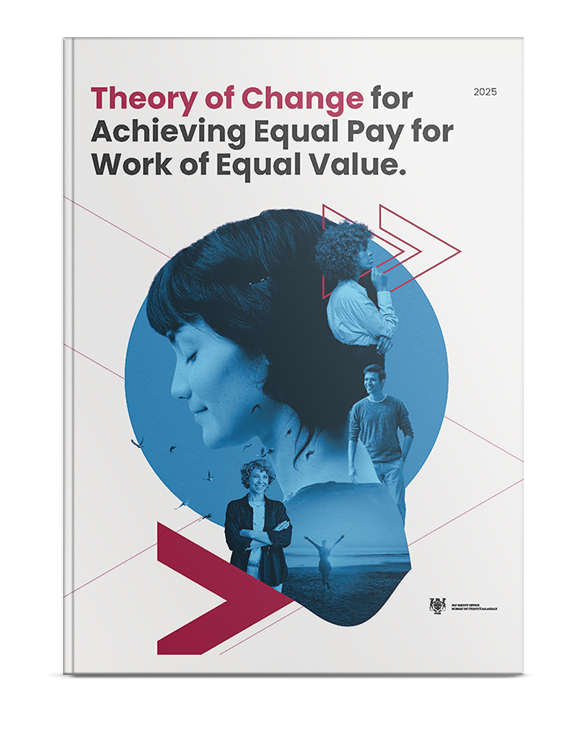
The Pay Equity Office (PEO) of Ontario introduces the new Theory of Change for Achieving Equal Pay for Work of Equal Value, a comprehensive guide for policymakers, employers, unions, and advocates.
This resource, launched in conjunction with International Equal Pay Day and shared with Equal Pay International Coalition (EPIC), distills global best practices for overcoming the gender pay gap, which averages 20% worldwide and 13% in Ontario.

Why Download This Report?

  • Discover evidence-based solutions tackling seven root causes: undervaluing women’s work, low workforce participation, educational and job segregation, discrimination (including intersectional impacts), the care penalty, lack of pay transparency, and limited unionization and collective bargaining.
  • Gain insights from real-world case studies in Ontario, Japan, Luxembourg, Australia, New Zealand, the EU, Sweden, South Africa, Spain, and Iceland.
  • See the economic and social benefits of pay equity: up to US$7 trillion added to the global economy, 20% higher GDP per capita, lower poverty, and boosted workforce participation.

Solutions include:

  • Gender-neutral job evaluation and legislation
  • Expanded childcare, parental leave, and flexible work policies
  • Targeted STEM education initiatives
  • Pay transparency mandates, regular audits, and action plans
  • Strong union representation and inclusive bargaining agreements
Theory of Change for Achieving Equal Pay for Work of Equal Value2026-08-19T14:32:18-05:00

Pay Equity in Pop Culture: How TV, Sports, Music, Gaming, and Art Shape the Conversation.

Pop culture isn’t just entertainment—it’s a powerful mirror of who we are and what we value. In Season 3 of Level the Paying Field, Ontario’s Pay Equity Commissioner Kadie Philp takes us on a dynamic journey through the world of pop culture, uncovering how the spaces we escape to are also places where real battles for pay equity are being fought.

Across six compelling episodes, we meet the women at the heart of it all. In music, we explore the legacy of artists who’ve used their voices to resist exploitation while demanding creative and financial control. In television, we examine how gender gaps in writers’ rooms and production studios affect not only who tells the stories but whose stories are told. The sports episode tackles pay inequity on the field, revealing how athletes are organizing for better treatment, better funding, and greater recognition.

Gaming, one of the largest and fastest-growing sectors in the entertainment industry, presents a notable contradiction: nearly half of gamers are women, yet only 23% of developers are. Through that lens, we explore not only representation on screen but also toxic work cultures, wage gaps, and the resilience of women carving out space in digital spaces.

Art-related careers uniquely intertwine personal identity with professional practice, often requiring artists to navigate deeply gendered experiences and societal expectations. Artist Alexa Mazzarello speaks candidly about the realities of trying to thrive creatively and economically in a system that undervalues care work, both in life and on canvas. Her work—and her collective—remind us that equity isn’t just about being included; it’s about being valued.

Throughout the season, one message rings clear: pop culture is a powerful reflection of who holds power, whose work gets rewarded, and whose stories shape the mainstream. It’s also a space of possibility. A place where norms can be challenged, narratives reclaimed, and industries rebuilt to be more equitable.

Whether it’s through mentorship programs in gaming, collective bargaining in sports, or public art that speaks truth to power—change is happening. And Level the Paying Field is here to document that shift, one episode at a time.

🎧 Season 3 is now available on all major podcast platforms!

Pay Equity in Pop Culture: How TV, Sports, Music, Gaming, and Art Shape the Conversation.2026-07-23T13:26:00-05:00

Gender Wage Gap in Ontario Varies by Municipality

On World Cities Day we reflect on the ways women across Ontario are uniquely impacted by the gender wage gap. The gender wage gap persists in Ontario, no matter how it is measured. The hourly wage gap sits at 13 percent as of 2022, only six percentage points less than 1998; this means that, on an hourly basis, women make 87 cents on average for every dollar made by a man. While the gap persists it varies by sector, sub sector, and even geography.

Last year the BBC published the article Why young women earn more than men in some US cities which considers factors that may contribute to women achieving pay equity or out-earning men in certain US major cities. I was curious if the factors identified in the US applied to cities across Ontario.

From the article we learned that municipalities with higher levels of women with post-secondary education seem to be more likely to have a smaller gender wage gap. Another contributing factor to the wage gap, according to the BBC, is predominance of female-dominated industries. Jurisdictions with a greater number of industries with female-job classes tend to have smaller wage gaps (and vice versa). Average age of motherhood also seems to be a factor: women who are mothers tend to make less, on average, than women without children and US jurisdictions where the average maternal age at first birth is lower tend to have wider gender wage gaps (unfortunately, city-level data is not currently available for maternal age in Ontario, but you can read more about the impact of motherhood and unpaid domestic labour here). In addition to the factors suggested in the above BBC article, we also know that the gender wage gap is often larger for racialized and newcomer women.

When we take these indicators and apply them to Ontario jurisdictions (particularly jurisdictions with notably higher or lower gender wage gaps), we can get a better understanding of how they can contribute to income discrepancies between men and women across the province. Using data from Statistics Canada we analyzed just under 50 municipal jurisdictions across Canada. Of course, the data isn’t perfect, but did provide interesting insights that warrant greater research. Below we’ll share what we learned about 3 Ontario Municipalities, Elliot Lake, Leamington, and Petawawa.

Elliot Lake is a city in Algoma District that was previously a mining town in the 1950s and produced most of the world’s uranium for decades. As most of the mines shut down, the main industries today are cottaging and tourism. With women on average making 92% of what men make, the wage gap is approximately 17% smaller in Elliot Lake than the rest of Ontario.

Bar chart comparing Ontario and Elliot Lake

Almost 90% of people living in Elliot Lake were born in Canada. In addition, only 3% of individuals in Elliot Lake identify as a visible minority – this is 31% less than the percentage of the population that identifies as racialized in Ontario. Approximately 24% more of the population speaks one of Canada’s official languages as their first language when compared to the rest of the Ontario. While they are imperfect indicators, we know that newcomer women face greater barriers in the workforce; therefore, being born in Canada, not being a racialized individual, and speaking one of Canada’s official languages as a first language may contribute to women’s economic success in this jurisdiction.

However, while postsecondary education attainment levels appear to be a determinant of a smaller wage gap, only 41% of men and 50% of women aged 25 to 64 years old have a postsecondary certificate, diploma, or degree in Elliot Lake. Additionally, only 9% of men and 15% of women aged 25 to 64 years old in Elliot Lake have a bachelor’s degree or higher. Although women still report higher rates of educational attainment than men, the rates of post-secondary education for both men and women are significantly lower in Elliot Lake than the rest of Ontario, which is not aligned with what we might expect.

Looking at another jurisdiction, in Leamington, the gender wage gap is almost 86%, over 10% lower than the rest of Ontario. Leamington is one of Ontario’s southernmost towns and is the second largest municipality in Essex County.

Bar chart comparing Ontario and Leamington

Leamington has significantly lower educational attainment levels than the provincial average for both men and women, which is surprising considering the low gender wage gap. Also surprising is the predominance of male-dominated industries: agriculture, forestry, fishing, and hunting jobs make up just under 19% of the labour force, and account for 20% of male jobs and 16% of female jobs in the jurisdiction. In comparison, this same industry sector accounts for just over 1% of Ontario’s entire labour force. The second largest industry in Leamington is manufacturing which is also made up of predominantly male job classes, and it makes up almost 18% of the jurisdiction’s labour force.

Fewer women are part of the labour force in Leamington – the participation and employment rates for women are both significantly lower than the rest of Ontario.

Finally we can look briefly at Petawawa, who on the other end of the spectrum has a significantly higher gender wage gap than the rest of Ontario. Petawawa is the largest community in Renfrew County and is known for its access to natural resources and strong military history and involvement. In Petawawa women make 53% of what men make on average, making the wage gap 22% larger than the Ontario average.

Bar chart comparing Ontario and Petawawa

Petawawa has a significantly lower number of immigrants than the rest of Ontario (just over 6% of the population identify as immigrants, which is 24% lower than the average in Ontario) and a low percentage of the population identifies as a visible minority (just over 6% for both men and women, approximately 28% lower than the rate in Ontario).

Additionally, a much larger percentage of the population of Petawawa spoke one of Canada’s official languages as a first language, when compared with the Ontario average. While we might expect that a lower number of newcomers and racialized individuals may contribute to a lower wage gap, we also know that this is only one of many factors.

In Petawawa, 59% of the population aged 25 to 64 years old has earned a postsecondary certificate, diploma, or degree, which is almost 10% lower than the average in greater Ontario. These numbers drop significantly when looking at percentage of the population with a Bachelor’s degree or higher: only 20% of the population of Petawawa has achieved a Bachelor’s degree or higher (almost 17% less than the provincial average) and only 15% of men and almost 27% of women have done the same. The lower levels of university education may be a factor contributing to the larger gender wage gap in Petawawa.

Turning a spotlight on a handful of Ontario jurisdictions can help us understand the factors that may be contributing to rising or falling gender wage gaps. Perhaps surprisingly, many of these factors seem to be in opposition to what we might expect, or they don’t seem to paint the full picture. The examples above remind us that indicators such as education, industry, and immigration status are only a starting point in understanding why the gender wage gap exists, and how we can lessen it. With seventy percent of the gender wage gap remaining unexplained, we need more research on factors that may be contributing to the gender wage gap and we need a commitment to closing these data gaps.

To learn more about factors that may contribute to women’s access to economic and personal security in cities across Ontario (and Canada), read the Canadian Centre for Policy Alternative’s report, The Best and Worst Places to be a Woman in Canada 2019

Gender Wage Gap in Ontario Varies by Municipality2026-09-29T15:15:08-05:00

Pay equity is good for everyone – let’s make it a reality: Opinion

By Julie Cafley, PhD and Kadie Ward

International Equal Pay Day, recognized by the United Nations and observed on September 18, acknowledges the crucial need for society to address ongoing efforts to achieve equal pay for equal work. This year, it comes on the heels of a blockbuster summer for women’s economic power in show business.

We saw women-centred entertainment drive record-breaking revenue at the box office and on the music charts. Whether it was the Barbie movie, Beyonce’s “Renaissance” tour, or Taylor Swift’s “Eras” tour, these most-talked-about women of the summer have all used their platforms to champion pay equity, too.

How does that translate to actual progress for everyday women?

We’ve heard many corporate leaders’ good intentions to address the issue for years. We’ve read the commitments to equity, diversity and inclusion, but things have not substantially changed despite these declarations.

According to Catalyst research, Canadian women face a gender pay gap by every measure. Among all workers in 2021, women earned 88.7 per cent of what men earned based on average hourly wage rates. For racialized women, the pay gap is even wider. Canadian women of colour made only 59 per cent of what Canadian men earned who did not self-identify as people of colour.

As monetary policymakers look to curb inflation, the research reminds us that unlocking the economic benefits gained through pay equity measures is undeniable.

An often-cited report by McKinsey estimated that by 2026, Canada can potentially add $150 billion to its annual GDP by supporting women’s participation in the workforce. Transparency in salary ranges on job descriptions can shift the responsibility from candidates to organizations, promoting fairness and equality.

Another McKinsey study has documented the effect of including and excluding women in 1,000 organizations across 15 countries since 2015. It showed how gender-diverse and inclusive teams are more likely to innovate, radically helping their companies gain a competitive edge. In addition, companies with gender diversity on executive teams were 25 per cent more likely to experience above-average profitability than peer companies without it.

In short, gender equity is good for everyone and the bottom line.

One initiative helping address this imperative is Catalyst’s CEO Champions for Change, where leaders pledge to increase women’s representation in senior leadership and on boards and provide valuable data towards this goal.

Having diverse and representative leadership is essential to drive tangible change in culture. A critical aspect of this is the need to address not only gender but also other intersectional realities such as race, ethnicity, disability, and sexual orientation. According to the “critical mass theory” by Harvard professor Rosabeth Kanter, a group needs 30 per cent representation to impact culture significantly.

Equity issues should be at the forefront of strategic plans, balanced scorecards, and institutional metrics. A systematic and data-driven approach is needed to drive progress and create a better understanding of leadership selection and why workplace equity still eludes us.

By prioritizing concrete plans to close the wage gap and achieve equal pay, we can create a fair and inclusive society that benefits individuals and boosts the economy. Plus, it’s the right thing to do. Just ask Barbie, Beyonce, and Taylor Swift.

Julie Cafley, Ph.D., is the Executive Director of Catalyst Canada, a global non-profit that advances inclusive workplaces. Kadie Ward is Commissioner & Chief Administrative Officer, Pay Equity Commission of Ontario.

This article was prepared for and originally published on Talent Canada’s website.

Pay equity is good for everyone – let’s make it a reality: Opinion2026-08-07T10:08:48-05:00

Addressing the gender pay gap and gender equality pushback

In March 2023, the United Nations Commission on the Status of Women held its 67th Conference (UNCSW67). Representatives of Member States, UN entities, and Economic and Social Council (ECOSOC)-accredited non-governmental organisations (NGOs) from all regions of the world participated in conversations around the theme of “Innovation and Technological Change and Education in the Digital Age.” As part of Canada’s Delegation and representing the Pay Equity Office of Ontario, I was able to contribute to the formation of Agreed upon Conclusions that will shape the way UN Member States approach achieving gender equality.

… the importance of “pushing back on the push back” to achieving gender equality, and second, the promise that technology holds with respect to increasing transparency and achieving pay equity globally.

As participants made their submissions throughout the first working week, two common themes began to emerge: first, the importance of “pushing back on the push back” to achieving gender equality, and second, the promise that technology holds with respect to increasing transparency and achieving pay equity globally. Let’s start with the latter and its impact on closing the gender wage gap (GWG).

The OECD’s Pay Transparency Tools to Close the Gender Wage Gap reports that across the OECD countries, the average annual gender wage gap sits at 12.8% (this number is down from 19% in 1996 when member countries first started reporting on the gap). While one of my earlier articles on the OECD Forum Network looks at potential causes for the gender wage gap decrease, one issue remains clear: what gets measured gets managed. Every OECD country leverages technology to collect and analyse gender-disaggregated pay data at the national level, and typically publishes them on their national statistics office’s (NSO) website. However, just less than half of OECD countries (47%) require private sector firms to report gender pay gaps to stakeholders including workers, their representatives, and the public. We know that data collection without analysis or accountability does not lead to progress and governments should be encouraged to take action on this.

At UNCSW67 I was invited to speak at the Czech Republic’s “New Opportunities to Reduce the Gender Pay Gap in the Digital Age” event. During the session panelists discussed pay equity initiatives in Canada, Costa Rica, and across the EU. Most notably we discussed the EU’s Pay Transparency Directive, which requires EU companies to share information about how much they pay women and men for work of equal value, and to take action if their gender pay gap exceeds 5%. Many jurisdictions including New York and California in the US and British Columbia in Canada are following suit – in fact, pay transparency laws could soon cover 20% of Americans.

We know that addressing gender wage gaps with policy and technology can take many forms. Both Ontario and the Government of Canada use pay equity legislation to close wage gaps. Fundamental to our legislative and regulatory framework is the concept of “equal pay for work of equal value” which recognises that work historically or traditionally done by women has been undervalued in the labour market primarily because it has been categorised as “women’s work”. This concept goes beyond traditional “equal pay for equal work” which seeks to redress the systemic devaluation of certain types of jobs because they are associated with women. Through a gender-neutral job evaluation process the policy framework necessarily requires transparency in pay in order to analyse the relationship between the value a job category delivers to a company and its corresponding compensation. This framework is put into practice by technology-enabled tools that support a company’s pay equity analysis. Agreed upon conventions for the UNCSW67 call upon governments to hasten the use of technology-enabled policy to close gender gaps.

Let’s now consider the other theme that emerged at UNCSW67: “pushing back on the pushback”. This theme challenges governments to consider how they can further leverage technology and digital platforms to protect and promote gender equality. A report launched by UN Women and the UN Department of Economic and Social Affairs (UN DESA) highlights that, at the current pace of progress, Sustainable Development Goal 5 (SDG 5) —achieving gender equality—will not be met by 2030. Global challenges such as the COVID-19 pandemic and its aftermath, violent conflict, climate change, and the backlash against women’s sexual and reproductive health and rights are further exacerbating gender disparities. Consider the US Supreme Court’s decision to overturn Roe v. Wade and that it’s now illegal to have an abortion in 14 different US States, limiting access to critical healthcare. Or how, since the takeover of Afghanistan by the Taliban in August 2021, women have been wholly excluded from public office and the judiciary and systematically excluded from public life, unable to attend school past sixth grade. Access to education and reproductive rights help women participate in the paid labour market, which allows for financial stability and in some cases, financial independence. Most importantly, access to education and reproductive healthcare have been cited as two baseline factors that support women’s attainment of equality.

So, what do these themes mean for policy makers? The UNCSW67 Agreed Upon Conclusions offer a host of recommendations, but fundamentally they point to the underlying need for policy makers to keep the most vulnerable in mind when they legislate. That is, creating legislation that will enable women to prosper and self-actualize in their local and national economies. Legislation that enables equal participation and equitably recognises the value of her participation.

This article was prepared for and originally published on the Organisation for Economic Co-operation and Development (OECD) Forum.

Addressing the gender pay gap and gender equality pushback2026-08-21T11:58:22-05:00
Go to Top